
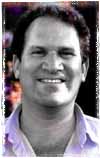
 Awakening the Buddhist Heart Within - An Interview with Lama Surya Das by Peter Moore
ALTERNATIVES: What will you be teaching in Oregon when you come to Breitenbush this summer?
SURYA DAS: Awakening the Buddhist Heart, the heart opening practices of love and compassion. I’ll be teaching loving kindness meditation, Tibetan compassion meditation and Tibetan Tonglen exchanging self & others meditation. There’ll be chanting, breathing exercises, and some dyad exercises for working together. And there’ll be dharma teachings, some questions & answers, and some schmoozing. This will be a meditation retreat cum workshop, you know, Breitenbush style.
ALT: Getting up early in the morning?
SD: Fairly early. Yes.
ALT: Probably not 4:00, but ... 6:00?
SD: Yes, maybe 6:00 or 7:00. When I teach workshops at Omega and Esalen and Breitenbush, it’s a little lighter schedule, partly to accommodate the schedule of the retreat center staff: the workers, meal preparers and people who open & close the windows, doors & lights.
ALT: Not to mention the participants themselves who . . .
SD: Of course, but we really don’t care about them. (laughter) Don’t quote me! When I was an intitiate they used to make me get up at 4:00 every morning for years. Now it’s my turn. Let the next generation suffer. (laughter)
ALT: Yes. I spent a couple of months at Kopan monastery near Bodhinath, in Nepal.
SD: Then you know how it is. No heat.
ALT: It’s true. I was there December through February in ’76.
SD: You were bold. That’s where I started off with Tibetan Buddhism. Lama Yeshe was my first lama.
ALT: He was mine as well! We may have met half our lives ago in Nepal. This is a good segué into one of the questions I wanted to ask you. In your book Awakening the Buddhist Heart, you tell how the Dalai Lama describes himself as “a simple monk”. He rises at 4:00 a.m., meditates for two hours, then turns on the BBC world news, etc. But you describe him equally as a man with a world mission, a human rights activist. Could you comment on the dynamics of spiritual and social activism?
SD: Spiritual activism is heart centered dedication to the betterment of all. Doing that—wherever your karma, your vocation, your life finds you. It is being of service, inside or outside the monastery; thinking of the greater good and the bigger picture, not just of oneself and one’s own limited concerns or gratification.
Spiritual intelligence involves a sensitivity to suffering of others, i.e. compassion. It means not just sweeping the garbage under the rug—or the radioactive waste under the ocean—and acting like it’s not going to affect anybody.
I really am inspired by the model of masters like the Dalai Lama of Tibet, Thich Nat Han of Viet Nam, An Sang Suu Chi of Burma, Albert Schweitzer in Africa, Gandhi in India, Martin Luther King, Elia Weizel, and others. It’s important today to gain wisdom inside, manifesting service and compassion outside.
My first guru, Neem Karoli Baba—Maharaji—he always used to talk about “Seva”. Seva is a beautiful sanskrit word for “service”. It means in Hinduism, “service to God through serving humanity”. Service to the highest through everyday service to your family, at work, the creatures, the environment, and so on. Seva is particularly appropriate today. We don’t live reclusive lives, we now have a global culture with worldwide travel and communication technology. Integration is the name of the spiritual game today, not seclusion.
The Dalai Lama is a great example of this integration, he’s really strong. If you have enough inner strength, as he does, then you sort of carry your own atmosphere with you. My own great Tibetan masters—Kalu Rinpoche, who I traveled quite a bit with in the west, and Nyoshul Khenpo Rinpoche—they carried their own atmosphere with them, too. Wherever they were, you felt like you were with them in their buddha field, through their pure perceptions, their open heartedness, their incredible spiritual splendor and authentic presence.
Service is a very important part of the spiritual life. It’s always been one important lane of the highway to enlightenment, to spiritual realization, in all religious traditions.
ALT: I noticed that the saints and sages you listed were an interfaith group. These people came from different spiritual backgrounds, different cultures, different continents. Do you see a growth in and connectivity through interfaith teaching and activity in our time?
SD: That’s part of my message: contemporary dharma, not just ‘Buddhism in the west’. We need to be very ecumenical and inclusive today and avoid sectarianism and dogmatism.
In America we have ‘Melting Pot Karma’. We’ve also got ‘Melting Pot Dharma’. We may stay with our church of origin, but we may be doing meditation or yoga on the side. In this way we can find a more tailor-made spirituality that really transforms the individual, and thus the whole world eventually. We don’t have to follow one curriculum, like “one size fits all” spirituality.
ALT: I know some fundamentalist Christian friends who say that tailor-made spirituality is actually the great lie. How do you respond to the claim that this is situational ethics or situational religious truth, which may not be truth at all?
SD: I’ve heard that, I know what you’re saying. It’s described as “cafeteria style” religion, and so on. But we live in the country that invented cafeterias! That’s what half the people want. Listen, once people start to talk about fundamentalism and the great lie, we’re no longer in dialogue. What is really being said is “If it’s not from Jesus, if it’s not in the Good Book, it doesn’t count”. That’s always the fundamentalist issue. That’s why I don’t really argue or debate with anybody.
What I try to teach are the universal questions that these different viewpoints are trying to answer. Fundamentalism, or New Ageism, or any “ism” is responding to a need, so let’s look into that need. What are these universal questions that we have? These are not just academic questions. We’re not graduate students, studying comparative religions—we’re seeking a transformative experience through spirituality, nothing less. It’s the spirituality that’s the active transformative agent, not the institutional religion. The spirituality and the mysticism are the active ingredients in transformation, like the vitamin C that’s in citrus, but you can also get it from a vitamin pill.
What does transform us? How can we live better lives? Why do we suffer? What is the meaning of death? Is there an after-life? We need to really ask those questions and seek answers that we can hear and personally verify. I think that’s very important. That’s where the tailor-made part comes in.
Again, to reiterate, since you asked about interfaith things: I’m interested in interfaith dialogue, but everybody doesn’t have to be in the same religion. We have a shrinking planet, but we all have to recognize that there’s no one cuisine that’s the best for everybody, there’s no one lifestyle that’s the best for everybody, there’s no one religion that’s the best for everybody. Of course all the religions have common ethical principles, and recognition of the transitory nature of material things and worldly life. All have some contemplative aspect, prayer or meditation, or something! But if the Pope says, as he did last summer, that the other religions are defective and deficient, I think that’s his personal viewpoint. I like and respect the Pope, but I don’t have to agree with everything he says.
ALT: I noticed that your book is both simple and complex. It is presented in a very accessible style, yet linguistically you introduce some exotic words with specific and rigorous definitions. Your book is helping those words find traction here, to become part of the English language. “Boddhicitta”, “Dharma”, “Dzogchen”, and “non-dual teachings” are examples.
SD: Of course, I’m doing that on purpose. It’s very difficult to learn complex cultural concepts and words, and more so to learn them in our own language, when they were developed in an entirely different one. Obviously I’m using the American English idiom for my books, but if you try to find the English word equivalent to “Boddhicitta” or “Bodhisatva” or “Karma”, you get a very weak translation. Fortunately some of these words are like certain yiddish words, like “bagel” or “schmuck”. They’re being adopted into English. “Buddhism” or “yoga” are good examples. The culture knows these words, they’re hardly foreign anymore. Dharma and Greg is on ABC TV every Tuesday night. It’s important to ease us in the direction of having a more sophisticated language.
ALT: Are you familiar with Paul Ray’s work and his book “Cultural Creativity”?
SD: Yes. He says there are 40 million cultural creatives around the country. I thought he was going to say, you know, like four thousand.
ALT: That’s just the point he makes. Ray finds that most cultural creatives think they are isolated, with maybe a small group of like-minded friends, in an otherwise traditionalist society. But in fact, cultural creatives are the fastest growing part of adult American society. Your book contributes to this movement. You’ve kept it very understandable, yet you increase the vocabulary. You show how these new/ancient understandings fit into and extend the highest ethics of our own culture.
SD: That’s very flattering. I am very aware of the richness of traditional spiritual teaching that I’ve learned in the east from my Tibetan and asian teachers. I am also aware of how difficult, even inaccessible, these teachings are to most here in the west. To get access to these teachings, I had to learn the Tibetan language and be a monk and spend 25 years over there. Now I’m trying to make the bridge. I think it is the next generation that will get to fulfill the promise of dharma in America.
I am also trying to bring these ethical and contemplative wisdom values into mainstream society, not just have them be a counter-cultural thing. I’m looking for ways to appeal to young people. I want to open the Dharma gate wide so it’s not like the eye of the needle, so people can learn to meditate or practice yoga or chant or do self-inquiry, without having to sign up and be “buddhist”. Rilke says “You must change your life.” This is not just for initiates only. I’m trying to lay groundwork for the next generation of great teachers from the east, or from the west—or wherever they’re going to come from—and the wisdom that is going to come out in the 21st century. That emerging wisdom is a non-sectarian, socially minded, ecologically oriented, democratic dharma, not a hierarchical or feudal sort of fundemantalist dharma.
ALT: You are an optimist. Seems like all Tibetan lamas are optimists.
SD: It’s the high mountain air that keeps them high. But optimism is innate in the teachings. Life is too beautiful and too precious to take it too seriously, and if we take ourselves too seriously it’s not much fun. There is also joy. We can “lighten up” as well as “enlighten up” on the path. Joy is a spiritual value, it is one of the great spiritual virtues.
ALT: You spoke of “egalitarian” social institutions emerging out of the dharma....
SD: The epilog to my book Awakening the Buddha Within is called “Toward the Western Buddhism and Contemporary Dharma”. It describes trends emerging in western buddhism—non-sectarian, gender equal, psychologically astute rather than ritualized, democratic rather than feudal, socially engaged rather than reclusive, lay rather than monastic, and so on.
ALT: Do you see these developments as a fundamentally “western” morph on the ancient spiritual practices?
SD: They’re western, but more, they’re modern. It’s happening in Japan and southeast asia, not just the west. It’s happening in Judaism and Christianity, not just in Buddhism. Women have broken through into the priesthood. There’s more emphasis on personal transformation and wisdom and contemplation now, rather than just belief. These are all aspects of modernism and it’s happening worlwide.
ALT: Do you see this modernism extending to areas of Tibet?
SD: It works both ways. I have been asked to teach in Nepal and India, also in Bhutan, in China and Japan. Modern people there want to hear teachings from a modern perspective. They like to hear it in English, from somebody who is questioning and thinking about it. They want to ask about their relationships, their vocation, the internet. They’re asking about homosexuality and AIDS. They really can’t ask such questions of an 80 year old priest who has never traveled the world, who doesn’t read newspapers or speak foreign languages.
Of course there is room also for those traditional priests and teachers. We have to work together. We’re all really teaching the same thing but just in different ways. Like if we meditate in chairs in America, how different is that really?
ALT: When I was in Nepal, mid-70’s, I read the literature coming into Nepal from what we called Red China. The Chinese characterized their invasion of Tibet as a “liberation” from the feudal overlords who postured as spiritual masters but who, in fact, enslaved the Tibetan people. Are they still taking that line?
SD: The Chinese are willfully misunderstanding that situation to rationalize their own conquest. It’s like Hitler “liberating” Poland in 1939. The Chinese Communist Red Army conquered Tibet and is trying to wipe out the culture. There are now more Chinese in Tibet than Tibetans. That’s really sad. We’re all afraid that Tibetans and Tibetan culture, language and religion are going to go the way of the Native Americans in our country. They’re being overrun.
ALT: What’s at stake with Tibet?
SD: To understand Tibet, you have to remember that Tibet stayed isolated and sequestered for centuries, until the 1950s. It didn’t change like the west changed. The west had the Protestant revolution, the Reformation, and the Renaissance. Then we had the Age of Enlightenment in the 1700s, followed by the Industrial Revolution and our Civil War to free the slaves in the 1800s. Then came the suffragettes and women’s rights, and the technological and communications revolutions of the past century.
During all those centuries of social change in the west, Tibet’s value was preservation. Tibet tried and basically succeeded in staying the same way, protected and untouched until the 1950s, even after the two world wars. Amazing. And what they were preserving was a wisdom culture. It was the last extant wisdom culture in the world. The Delphic Mysteries, the Rosicrucians, the Gnostics, the Essenes, the Sufis, all gone. It’s amazing what Tibet preserved. All of their best and brightest went into that, not into science and getting to the moon.
Tibet’s wisdom culture is really worth preserving; it’s like the Amazon rainforest in South America. The rainforest creates oxygen for the world and there are natural medicines in the plants. We really need to preserve the rainforest. It’s part of our world’s natural resources, not just Brazil’s. Similarly, any people and culture has also rights to exist and not be wiped out.
Tibetans are in a very difficult situation today. Even the Dalai Lama says he is no longer fighting for Tibetan independence. He just wants to preserve Tibet and his people. He’s trying to compromise with the Chinese but it’s very difficult. The Chinese don’t compromise. They feel they can afford to wait. With more than one billion people, the Chinese intend to assimilate Tibet.
ALT: I think that is certainly Chinese political intent, though I’m not sure the Tibetans are going to go willingly into that dark night.
SD: True. While the Dalai Lama is alive, Tibetans have a government and a leadership and schools and cultural institutions in exile. But what happens the next few decades, who knows?
ALT: I remember Lama Yeshe speaking, laughing really, saying it took the invasion to create this diaspora, so that Tibetan wisdom could flow into the world.
SD: That’s the good news. Karma is very hard to understand. What has happened is not entirely bad.
ALT: That flow of Buddhism is definitely influencing our society as well.
SD: I think so. Buddhism in general has tremendously influenced our society. Look at the effects in language and the arts. You find Zen arts and Zen gardens, you find it in architecture and Hollywood movies. We have the chanting albums out now, and Buddhist vegetarianism and social activism and non-violence. Buddhist psychology has transformed the psychotherapy community. Buddhist thinking is influencing education as well. The advent of emotional intelligence in the schools derives from Dan Goldman’s sort of sleuth-Buddhism book. And there are the mindfulness principles whose influences can be seen in the healing areas; for instance Jon Kabbat Zinn’s work, and that of Herbert Benson. Buddhist principles, like concentration and meditation, are taught by performance coaches like Tony Robbins. And then there are the athletic coaches like Phil Jackson of the Chicago Bulls.
Buddhism is having a lot of saturation into our culture. Many Americans are looking into these practices. We’re a practical people. We’re not looking for more dogma, we’re looking for something that can change our lives, like exercise—something you can do and get the result. Yoga and tai chi and chanting and meditation, these are all things that people do to have an experience, not merely to have something to believe in.
ALT: Spiritual pragmatism, if you will.
SD: Yes, or call it practical mysticism. Dharma in daily life. It’s about awakening from illusion. It’s about being a better citizen, a better parent, a better friend, a better lover.
We’re all part of the village. We’re all interconnected, we can’t ignore that. That’s why I am a big appreciator of the engaged Buddhist movement. People like Thich Nat Han are actively engaged in trying to make a difference, and not just saying “it’s all illusion” or “who cares, we can’t do anything about it”. That’s a cynical kind of 60’s drop-outism.
ALT: I notice it’s stylish to be viewed as a cynic intellectual.
SD: Well, since Nietzche announced the death of God, it’s become sort of hip to be an atheist or existentialist—the ‘meaning of meaninglessness’ and all that. But these are just waves.
We need to look into ourselves and ask, what does it really do for us? Is it congruent with reality? Does it make us happier, or are we becoming a company of pill poppers? Let’s look at the spiritual profit and loss sheet to see what our actions bring us.
ALT: Talk about our actions.
SD: It’s really not what happens to us that determines our karma, our destiny and our character—it’s what we do with it. Our actions determine the quality of our experience. We can’t control the winds of karma that are blowing from the past, but we can learn to sail better. Look at the great scientist, Stephen Hawking. His path is beneath his feet, even though he’s confined to a wheelchair. Communication is very difficult for him but he still communicates. He’s married, he’s writing books and researching, he’s a teacher, he has a life, he’s a mensche!
The good news is, it comes down to what we do with it. That’s where spiritual or inner mastery is important. We’re not victims of circumstance, we’re masters of that, we are responsible. The steering wheel of destiny is in our hands. That’s the ancient teaching of karma, not that it’s all scripted. We are responsible, it’s what we do that makes the difference—what we do with our bodies, our minds, our speech and our intentions.
The bad news is, we have to do this without adult supervision. We’re in the driver’s seat. There’s nobody else doing it to us, there’s no one to blame.
ALT: That is a powerful take on karma. What about enlightenment? When I was taking teachings in Nepal and up in northern India and in Ladakh, I heard statements like “You Americans, you think everything is doable and you’re going todo it in your lifetime. Forget it.”
SD: Well that’s only one school of thought. In the Dzogchen tradition, in the MahaMudra tradition, they always emphasize enlightenment in this lifetime. But of course, the small print at the bottom says it’s through total diligence. It’s not about going to the meditation once a week and then to the bar afterwards.
Ultimately it doesn’t so much depend on the teacher but on the teaching and the practice. All of these exemplary individuals that we have talked about have a message and it’s the message that’s important. Part of the message is that anybody can do it. The message of the Buddha himself is that anybody can make the spiritual journey. Anybody can become enlightened.
You can find out more about Lama Surya Das on the web: www.surya.org, www.beliefnet.com. You can write: Attn. Lama Surya Das, c/o Dzogchen Foundation, PO Box 734, Cambridge, MA 02140. Lama Surya Das will lead a retreat at Breitenbush Hot Springs from June 3-8. For more information, call Breitenbush at 1-503-854-3314 or inquire via eMail.
