
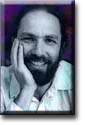
 Leaving Home - Singing Off Key by Ness Mountain
All my life I have loved to sing, but for as long as I can remember, I have feared it as well. As a child, and a teenager, I recall being surrounded by people who told me I was out of tune; though to tell the truth, I was never quite sure exactly what that meant. I still can’t hear it most of the time.
But it upset me a great deal. I always wanted to sing for other people, and it felt natural to do it. But when someone told me I was doing it wrong, it would remind me of the red marks I used to get on my papers in first and second grade.
I used to hand in my stories—and math sheets, too—with a kind of innocent generosity, naively expecting my small contribution to be praised. My memory of that feeling remains crystal clear. The papers were so good, I knew it. I had drawn them myself, tracing each letter or number, understanding the sacred meaning of each ancient symbol. The big green letters on the wall were literally like Greek to me: hieroglyphs of knowledge and power. I held that power to myself, against my heart. My teachers valued it. Surely my budding power of expression would endear me to them.
My paper would be received. Days later, when it was all but forgotten, it would be handed back to me, covered with red marks. “Are these all about MY work?” I remember thinking. It was impossible that the untidy undergrowth of corrections related to my masterpiece. It made me feel small. My understanding, my work, was not worthwhile.
Eventually, I came to peace with these problems. I learned to resent my early teachers, since my later ones were more positive (I was lucky enough to attend a wonderful alternative school). In this way I escaped some of the sense of failure.
Later, when I was told that my singing was off key, I persevered, hoping, I suppose, that a more accepting teacher—or audience—would appear. Sometimes it was OK; other times, someone would say, “You know, you’re off key,” or “It sounds OK but it’s not really in tune,” or other things like that. From the high spiritual state of the song, I would fall, painfully, into insecurity. I kept trying, hoping the problem would go away—it sounded right to me!—but after a time I started to anticipate it. “Was I on key?” I would ask. The faces of my listeners were never completely reassuring.
My own truth—that my song was correct—was rarely accepted, even by me. I continued to sing, but without a sense of security. I was a soulful teenager, and songs seemed to help me express some of the emotions that overwhelmed me. I memorized hundreds of songs; I can repeat them still: but I have never reconciled my desire to be heard, and my fear of being told I’m singing wrong.
A turning point came when I was in therapy with my old shaman, Meg Splendor. We used to do journeys, where I would go deep into trance, telling my own internal stories. On one occasion, at the end of the journey, I felt that I had reached a wonderful state of internal balance. I wanted to celebrate, to prove to myself how balanced I was. I decided to sing. I was sure I could sing in tune.
Astonishingly, my song was completely out of my control. Where, in a normal state of mind, I might be slightly out of tune, this was entirely unstructured. As I tried to rein it in—but unwilling to leave the sacred state of connectedness—I moved from one musical idea to another. The song slid up, down and sideways. It was beautiful, in a way, but I was overwhelmed with the effort of accepting it.
It was this effortful self-acceptance which has come to form a kind of basis for my song. Moving always towards accepting the beautiful, but unmusical, center of myself. This kind of singing has become a key part of my spiritual practice and my healing work.
And lately, I dream of performing. One day soon, I may overcome my fear.
Ness Mountain is a counselor and urban shaman living in Portland. Your comments on Leaving Home are welcome: respond to Alternatives or to Ness via eMail. .
