 The
War On Drugs = A War On Sick People and Doctors
by
Rick Bayer, M.D.
The
War On Drugs = A War On Sick People and Doctors
by
Rick Bayer, M.D.
"Many doctors know little about pain control and even fewer prescribe adequate doses of necessary pain relievers..."
Drug Policy Reformers come from many different backgrounds but share the idea that the War on Drugs is a huge failure and causes irreparable damage both within and outside of our national borders.
The WoD has a serious and potentially deleterious impact on every American because it directly restricts your physician's ability to provide pain and symptom relief. Perhaps your family members have had difficulty obtaining pain relief for chronic illnesses; or someone you know has had problems obtaining relief at the end of life. Millions of Americans have had such problems, it's a possibility for any of us. The potential victims of the U.S. government's WoD include every American who seeks medical care.The Narc and the MD When I received my license to practice medicine from the Oregon Board of Medical Examiners (BME), I was told that I could lose my license if I was "too generous" with controlled drugs. The BME then explained to me how to practice "politically correct" medicine. Naturally, the question arises: who determines what "politically correct" medicine is? The answer: the federal Drug Enforcement Administration (DEA), a law enforcement bureaucracy in Washington DC.
If you can visualize a policeman in Washington DC determining how much morphine your grandmother with cancer should get, then you can understand what has always plagued me in my profession. When it comes to prescribing controlled drugs, the cops at the DEA have the final word.
The effect is chilling. It makes scientific literature, the experience and training of a doctor, and the predicament of the patient all irrelevant.
After a few years in practice, it was impossible to avoid knowing doctors who had been "busted" by the BME for prescribing opioid drugs like codeine, morphine, and synthetic derivatives. Patients with chronic pain were to be avoided like the plague and were often referred from one doctor to another to try to stay ahead of the threatening letters from the BME.
Doctors who read the science and pay attention to outcomes know that prescribing opioids to patients in pain rarely leads to substance abuse. Unfortunately such doctors are not "politically correct." At one continuing education conference I attended, a DEA agent warned doctors not to prescribe more than six weeks of any controlled drugs, regardless of the predicament of the patient. But we all know that people in chronic pain generally suffer for more that six weeks. What are we supposed to do?
The answer from the "experts" is mind-boggling. We're told there is really no such thing as chronic pain. That is an outrageous statement on the face of it, and our patients tell us differently.
This is the paradox faced by doctors across this nation. We are told to pay attention to what bureaucrats and enforcers have to say, not to our patients. It's bizarre. What's wrong with providing pain relief and improved quality of life when there is no chance of substance abuse? The result of these policies is that patients live and die in pain and doctors are too frightened to help, except possibly in the terminal phase of illness.
Public Response to Repression As repression often does, the climate of fear fostered by the WoD elicited a patient revolution that continues to evolve. In 1994 Oregon voters passed Measure 16, the Death With Dignity Act, to allow mentally competent, terminally ill Oregonians to choose to hasten an inevitable death. This was an indictment of the very poor end-of-life care that dying patients routinely receive. Many doctors know little about pain control and even fewer prescribe adequate doses of necessary pain relievers—even at the end of life. Therefore, patients have sought to remove these decisions from the politically-tied hands of reluctant doctors, and placed the decision directly into the hands of the patient.
One year later, in 1995, the very important Oregon Intractable Pain Act became law. It provided sanctuary from the BME (our "proxy DEA"), allowing doctors to prescribe necessary intensive and long-term pain control if the patient signed an informed consent form.
Being Politically Incorrect In 1996 the complications of a blood clot ended my career in the private practice of internal medicine. It is life-changing to lose a practice, but one can find opportunity in crisis. I now enjoy doing volunteer work and am happy to no longer have to foster a relationship with the DEA and the BME in order to make a living. I can now be "politically incorrect" by speaking out about how the WoD hurts patients and doctors. Speaking out before would have meant risking my Oregon license to practice medicine, and my federal license to prescribe controlled drugs.
One of my first goals was to preserve the Oregon Death With Dignity Act by being a spokesperson for the 1997 "No on 51" campaign (51 was the attempted legislative repeal of Measure 16—our Oregon Death With Dignity Act). It is my opinion that the crucial part of Measure 16 is the provision which puts choice into the hands of the patient. This is why I oppose euthanasia but support physician aid in dying. The important difference here is that the patient is in control and must self-administer the barbiturate under Measure 16.
One consequence of Measure 16's passage in 1994 was to dramatically spotlight end-of-life care in Oregon. In effect, it turned the tables on the old paradigm. Not only did it suddenly become politically safe to administer generous pain medications, but to opponents of Measure 16 it became politically necessary to prescribe. Either way, patients have been the winners because Oregon now consistently leads the country in morphine prescribing (milligrams per person), and in percentage of hospice referrals. Additionally, Oregon has one of the lowest Medicare hospital death rates—i.e. folks die at home with family and hospice instead of in the hospital surrounded by machines and strangers.
Unfortunately, these gains are in political peril. As I write this, Republican US Senators (including Oregon's own Gordon Smith) are attempting to pass a bill, misleadingly called the Pain Relief Promotion Act, to undo the Death With Dignity Act that Oregon voters passed twice.
Oregon Medical Marijuana Act In 1997, a legislator from SE Portland, George Eighmey, tried to get a hearing on a potential Oregon Medical Marijuana Act but was denied the opportunity by Republican committee chair John Minnis. Once again, the legislature had failed and, once again, a voter initiative became necessary. In the course of doing a great deal of research on the subject (culminating in my co-authoring a book about medical marijuana), I visited patients in their homes and listened to stories about the medical use of marijuana. The research reminded me of cancer patients I'd met in my training and practice who informed me that they were using marijuana during chemotherapy to control nausea, pain and spasticity from nerve damage. The inescapable conclusion of my research was that, once again, federal propaganda was ignoring science while interfering with efforts to provide pain and symptom control.
My hope was that the Oregon Medical Marijuana Act would focus attention on persons who were chronically ill, as the Death With Dignity Act campaign had focused attention on end-of-life care.
The 1998 campaign for Medical Marijuana was intense. As a spokesperson, I had to publicly face a "hired gun" (a former AMA president) sent by the corporate pharmaceutical industry, as well as argue against opponents such as Senator Gordon Smith, Multnomah County Sheriff Dan Noelle, and numerous law enforcement officers who predicted the end of America if our law passed. Vigorous opposition also included the American Cancer Society, doctors from Oregon Health Sciences University, VIPs in the Oregon Medical Association, the BME, and other guardians of the status quo.
After a brutal and exhausting campaign, Oregon voters did indeed pass the Oregon Medical Marijuana Act (OMMA). Yet in spite of that, lawmakers like Kevin Mannix (running for Attorney General this fall) introduced legislation during the 1999 legislative session that became law and took away some of the voter approved gains from the OMMA.
The OMMA modified Oregon criminal law so that a person who follows the law can use the herb, Cannabis (marijuana), as medicine under the guidance of his/her doctor. Currently, over 800 patients, 400 caregivers (growers), and 400 doctors participate in the OMMA. The Oregon Health Division has a website that describes the program (www.ohd.hr.state.or.us/hclc/mm/).
The OMMA can only provide an exclusion to state law and cannot impact federal law concerning distribution of marijuana to sick persons. Therefore, in spite of scientific evidence in support of marijuana as medicine (see www.teleport.com/~omr), we still have some obstacles to overcome before this important, ancient, herbal medicine is truly accessible to patients.
Health care decisions are personal, and confidential and should be made by the patient and a chosen personal physician. This means that a patient should not be a victim of decision-making by the for-profit insurance industry, by self-righteous self-appointed dogmatic religious representatives, and/or by the political morality cops. The BME should protect patients from unsafe doctors rather than sanctioning doctors for providing legitimate medical relief.
There is one recent bright note in all of this: Recently a doctor was sanctioned by the BME in Southern Oregon for failing to give adequate pain and symptom control to dying patients. (This is the first and only time in U.S. history that such a discipline has been meted out to a doctor, so it is too early to call this a trend.)
Victories Against the WoD Consumer/patient pressure is what is driving the improvement in pain and symptom control in Oregon.
The Oregon Death With Dignity Act forced us to look at quality of care of terminally ill Oregonians. The Oregon Medical Marijuana Act is forcing us to look at quality of pain and symptom care in chronically and terminally ill Oregonians. Now the BME (in the past considered the right arm of the DEA in opposing opioid prescriptions and the OMMA) has finally recognized that under-treatment of pain and suffering is also bad medicine. The cumulative impact of these recent developments may be to improve the medical climate for prescribing controlled drugs under the protection of the Oregon Intractable Pain Law. As the medical climate warms to this more enlightened approach, prescription of controlled drugs can reflect good science and compassion instead of the misguided War on Drugs.
Who is a drug policy reformer? Is it the college student who is horrified that he/she can't qualify for student loans because they got caught with Cannabis instead of "just alcohol?" Is it the libertarian who rightfully questions the ethics of a government that passes prohibition laws to criminalize what one puts into their own body? Is it the agnostic who questions why religious dogma should replace our US Constitution when it comes to personal freedoms? Or is it the person who visits the doctor with grandma and wonders why doctors don't "do something" when it comes to treating grandma's arthritis or her cancer pain?
It is all of the above. No American can escape the tragedy of our country's failed drug policy. America's War on Drugs is a war on the American people and their doctors. Join the drug policy reform movement because you care about others; because you care about our society; and because you care about your rights and future needs as a healthcare consumer.
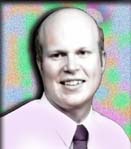
Richard "Rick" Bayer, MD, FACP lives in Portland, Oregon, is board-certified in internal medicine and a fellow in the American College of Physicians - American Society of Internal Medicine. He was in the solo private practice of internal medicine in Lake Oswego, Oregon from 1981-1996. He was a spokesperson for "NO on 51" to preserve the Oregon Death With Dignity Act in 1997 and was a chief petitioner for the "YES on 67" (Oregon Medical Marijuana Act) in 1998. He is a co-author of "Is Marijuana the Right Medicine For You? A Factual Guide to Medical Uses of Marijuana" (Keats 1998). He currently works with two non-profit organizations, the Multnomah County Health Department, and the Oregon Health Division to prevent childhood lead poisoning in Oregon.
