
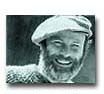
 Opal Creek Preserved by Michael Donnelly
Opal Creek, the spectacular waterway of ancient forest and mighty waterfalls that meets with Battle Ax Creek to form the Little North Fork Santiam River (the only undammed native salmon and steelhead river left in the entire Willamette River system) is saved!
New Wilderness After 12 Years On September 30, 1996, years of effort finally paid off and Congress passed retiring Senator Mark O. Hatfield’s last act (a rider, what else!) to set aside 13,000 acres of Opal Creek as Wilderness. Another 13,000 acres along the Little North Fork and tributaries will be a Scenic Recreation Area and the little known but wondrous Elkhorn Creek, home of the lowest-elevation intact ancient forest in the Cascades, will be a Wild and Scenic River. These are the only ancient trees that have successfully been set aside in the last twelve years, since the 1984 Oregon Wilderness additions! How did it happen?
Setting The Stage Opal Creek was originally included for Wilderness designation when then-Sierra Club NW representative Brock Evans first drew the lines on a 1967 map of areas to be considered for the first Wilderness Bill. Industry knew where the big trees were, so the final Bill removed Opal Creek, Breitenbush, the Kalmiopsis, Middle Santiam, South Umpqua (and other areas we’ve been trying to save ever since) from the original proposal.
Enter George Atiyeh. He and his cousins grew up spending Summers at the old mining camp at Jawbone Flats, in the center of the spectacular Opal Creek wilderness. He grew to love the area while spending his youth with Grandpa Jim Hewitt, father-in-law of George’s uncle, former Oregon Governor Vic Atiyeh. Young George dedicated himself to protecting Opal Creek. When he returned from special forces combat in Viet Nam, he began a tireless campaign to hold off Forest Service plans to log and road the area.
In 1980, Dave “Chainsaw” Alexander became District Ranger of the Detroit Ranger District and vowed he would “cut Opal Creek.” In late 1981, the Forest Service placed clearcut boundary markers on the giants of Opal Creek and surveyed the p-line for the road. Things were heating up.
A Successful Campaign In 1982, Mike Swaim, currently Salem’s Mayor, appealed and then brought suit against the sale. It was former governor Vic Atiyeh himself who Opal Creek . . . succeeded in getting State Wild and Scenic River protection for the Little North Fork in 1982. The area was also included in another Wilderness bill in 1984 only to be yanked at the last moment by none other than Mark Hatfield. Many efforts were mounted and then beaten back by industry. But the trees still stood. After a few more years of standing off Alexander’s Forest Service, we realized that we had to broaden the base of public support if we were to keep Opal Creek alive. One fine day in 1988, George Atiyeh, Lane County Commissioner Jerry Rust and I roamed the watershed, plotting the construction of a trail. One memorable weekend, a handful of us built what became known as the Bear Trail, the first cleared way into Opal Creek.
Dave Alexander responded by threatening to arrest George and me for “felony destruction of government property.” We said, “Please do. You plan eleven miles of roads and 1800 acres of clearcuts in there and we’re the ones destroying government property by creating a footpath?” We could see the headlines. It was just the sort of public attention we were hoping for. The 6’8” Paul Bunyan-esque ranger was a bully, but he wasn’t stupid. The arrests never came.
A State Senate Bill to designate Opal Creek as a state park also came to a hearing in early 1989. A multi-media slide show on Opal Creek was shown at the state capitol in support. Also in ‘89, Brock Evans, now Vice President of the Audubon Society, helped produce the Audubon special “Rage Over Trees,” narrated by Paul Newman, bringing national exposure to Opal Creek. Ted Turner showed it six times without commercials on his network, because industry succeeded in gaining an advertiser boycott.
In 1990, David Seideman’s excellent book “Showdown at Opal Creek” and Trygue Steen’s magnificent photo essays brought even more national attention to the area. In 1994, Oregon Representative Mike Kopetski succeeded in getting his Opal Creek Bill through the House only to see it die for lack of a Senate champion.
The End Game Then last winter, under mounting public pressure to save Opal Creek, Hatfield set up the Opal Creek Working Group. Five conservationists, George Atiyeh, Oregon Natural Resources Council’s (ONRC) Regna Merritt, The Nature Conservancy’s Russ Hoeflich and Friends of Opal Creek’s Marty McCall and myself, spent countless hours meeting with industry representatives and politicians, with a Willamette University mediator. We held tough for full protection. Finally, Hatfield unveiled his bill. Attached were some bad provisions which we hated having attached to Opal Creek. I wrote a July 29 opinion piece in the Oregonian staking it all on these problems. ONRC wrote a piece almost identically critical.
In the end, Hatfield’s bill got better. A proposed 59,000-acre public lands transfer to the Coquille tribe for logging was scaled back to 5,400 acres and those lands are subject to Option 9 (for whatever that’s worth). A two-year moratorium on cutting and a study of the Little Sandy watershed was gained. Hatfield even appropriated $750,000 to haul some disputed 1930’s mine tailings out of the watershed.
It’s not all roses, however. There is still a gaping hole in the watershed along Big Cedar Creek, site of a proposed copper mine. But, by and large, it has to be seen as a major victory.
Unfinished Business Opal Creek was saved because of the tenacity of her defenders. We must replicate this effort. There are still a lot of other special areas out there that are threatened. Given the extinction crisis, we obviously can’t afford to go twelve years between protecting areas. We must save all that’s left and we need to do it now.
We also need to keep Opal Creek from being loved to death. An estimated 50,000 people visited this year. If you can help with trail work and other methods of lessening human impact, contact: Friends of Opal Creek (503) 897-2921 or Friends of the Breitenbush Cascades (503) 585-8551.
Michael Donnelly lives in Salem with his family. This article first appeared in The Oregon PeaceWorker and is reprinted by permission.
